About the
Capital Pride Alliance

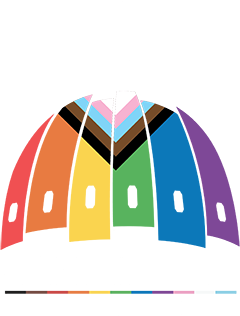
Organization logo. Shaped like the Capitol dome, with six slices representing the Pride colors. Red, orange, yellow, green, blue, and purple. The progressive colors, black, brown, baby blue, pink, and white in an upside down diamond shape from the top, under the Freedom statue. The Freedom statue and the copy below "Capital Pride Alliance" are all in white block letters.

Our Mission

The Capital Pride Alliance, through its stewardship of diverse programming and events, specifically year-round LGBTQ+ Pride festivities centered in Washington, DC and the National Capital Region, serves to celebrate, educate, support, and inspire our multi-faceted communities in order to grow and preserve our history and protect our rights for current and future generations.

What We Do

The Capital Pride Alliance (CPA), located in Washington, DC, is a nonprofit organization dedicated to serving the needs of the LGBTQ+ community all year long, through educational programs, major events, fundraising, outreach and advocacy, providing platforms for visibility, and supporting the work of our many community organizations and local businesses.
The Land that DC Sits On

It is important to acknowledge that the United States Capital is surrounded by just over a dozen tribal nations that thrive along the Anacostia and Potomac River watersheds, Chesapeake Bay area, and the states of Maryland, Virginia, and Delaware. Washington, DC, the land we will gather on for WorldPride DC 2025, and each year for the Capital Pride Celebration, sits on the ancestral lands of the Anacostans (also documented as Pamunkey Indian Tribe Nacotchtank), and over time neighboring the Piscataway and Pamunkey peoples.

The District of Columbia shares borders with Maryland and Virginia, and connects with lands along the Anacostia and Potomac Rivers. These river systems and current national parks are where the Piscataway, Pamunkey, the Nentego (Nanichoke), Mattaponi, Chickahominy, Monacan, and the Powhatan cultures thrived. According to the National Park Service, the region “was rich in natural resources and supported the local native people.” Just 40 years after the arrival of the Europeans, there were only a quarter of the original occupants remaining. The indigenous populations were decimated by new diseases and war. Many of the surviving joined other tribes beyond the boundaries of their ancestral lands, moving further inland and encroaching or merging with larger tribes.

We honor and respect the diverse Indigenous peoples connected to this territory on which we gather.

Our History

DC’s LGBTQ+ History Didn’t Start in 1975

LGBTQ+ people have made DC their home since the day our city was founded. It wasn’t until the middle of the 20th Century that we began to be noticed and to take action for our rights. Since then, we have come a long way in our journey toward equality. Here are some of the most significant events in the vibrant history of our community in DC.

Decades of Progress

The 1940s and 1950s:

The Beginning

The 1940s and 1950s saw police action, purges of federal employees, and discriminatory laws passed. But it also saw the first stirrings of gay and lesbian organization.

The 1960s:

Bold Steps

The 1960s saw unprecedented action on equal rights for African-Americans, Latinos, and women. And the DC gay and lesbian activists of that time seized the opportunity to make their case for equality.

The 1970s:

Out of the Closet and Into the Streets

Pride broke through in the 1970s, as the gay and lesbian community surged out of the closet all across the nation and here in DC. Tired of hiding, gay men and lesbians saw visibility as the first big step toward equality.

The 1980s:

Fear and Loss

The 1980s will be remembered for one thing in the LGBTA community: the beginning of the HIV/AIDS epidemic. It was also a decade of constant political and legal struggle for equal rights and simple survival.

The 1990s:

New Hope

In the last decade of the 20th Century, there were glimmers of hope for the LGBTA community: a friendlier political environment and effective HIV treatments. But there were also frustrating losses and new fronts in the movement for equality.

The 2000s:

A Turning Tide

Landmark victories showed that, at long last, the tide was turning in favor of LGBTA equality. The first decade of the 21st Century brought renewed hope to our community.

The 2010s:

Breathtaking Change

At the midway point of the second decade of the 21st Century, the pace of change has been nothing short of breathtaking.

Our Advocates